
What Causes HPLC Frit Clogging and High Backpressure?
Posted by Ian Ford on Jun 26th 2026
High backpressure is one of the most common signs that something in an HPLC or UHPLC flow path is becoming restricted. While many components can contribute to pressure problems, frits and filters are often among the first places to investigate.
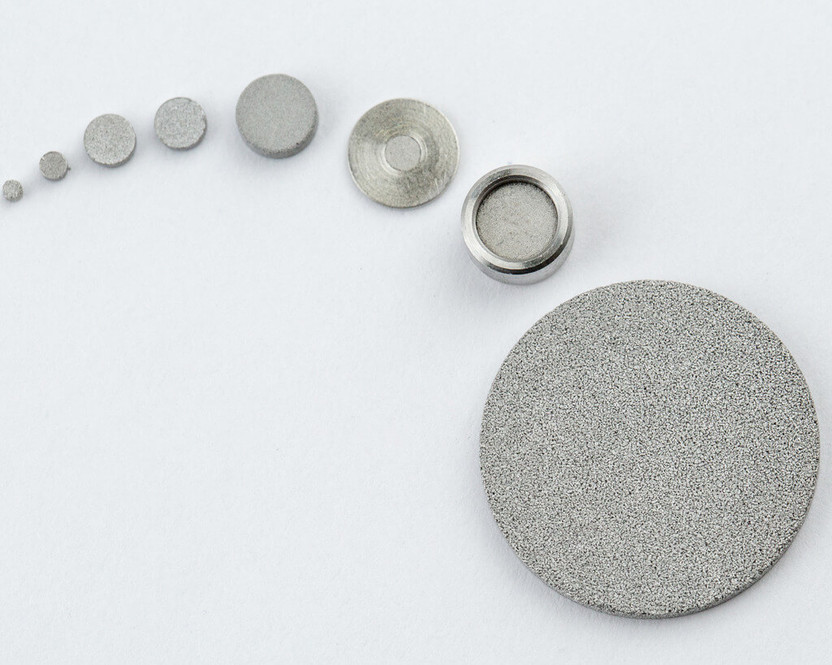
Frits are small porous components used in liquid chromatography systems to retain particles, support filtration, protect downstream components, and help maintain controlled flow. Because they are designed to interact directly with the mobile phase, sample, particles, or column packing material, they can gradually become blocked by material that should not be moving through the system.
When an HPLC frit becomes clogged, the result can be rising backpressure, unstable flow, poor reproducibility, distorted peak shape, or complete flow restriction. Understanding why frits clog can help laboratories reduce downtime, protect sensitive components, and choose the right frit for the application.
Quick Answer: What Causes HPLC Frit Clogging?
HPLC frit clogging is commonly caused by particulate matter in samples, contaminated mobile phase, buffer precipitation, sample precipitation, column packing fines, microbial growth, incorrect frit porosity, or chemical compatibility issues. The result is often rising backpressure, restricted flow, poor reproducibility, or reduced system performance.
Common Signs of a Clogged HPLC Frit
A clogged frit does not always fail suddenly. In many cases, the symptoms develop gradually as particulate matter, precipitated material, or sample residue accumulates in the porous structure.
Common signs include:
- Gradually increasing system backpressure
- Sudden pressure spikes
- Reduced or inconsistent flow
- Poor peak shape or peak broadening
- Loss of chromatographic reproducibility
- Longer equilibration times
- Difficulty maintaining normal operating pressure
- Complete blockage in severe cases
Before replacing major system components, it is worth checking whether a frit, filter, guard column, or column inlet has become restricted.
What Causes HPLC Frit Clogging?
| Cause | How It Creates Backpressure | What to Check |
|---|---|---|
| Sample particulates | Particles collect in the porous frit structure or at the frit surface | Sample filtration, centrifugation, extract cleanliness, and sample matrix |
| Mobile phase contamination | Fine debris accumulates over time in filters, frits, and narrow flow paths | Mobile phase filtration, storage containers, reservoir filters, and solvent age |
| Buffer or sample precipitation | Precipitated solids restrict flow through the frit or column inlet | Solvent compatibility, pH changes, gradients, salts, and flushing procedure |
| Incorrect frit porosity | Pores may be too small for the application, increasing restriction or clogging risk | Particle size, flow rate, pressure limits, sample type, and frit geometry |
| Material compatibility | Incompatible frit material can contribute to long-term performance problems | Solvent chemistry, sample sensitivity, corrosion concerns, and LC/MS requirements |
1. Particulate Matter in Samples
Samples that are not properly filtered or centrifuged can introduce particles into the flow path. These particles may collect at the inlet frit, in-line filter, guard column, or other porous components.
This is especially common when working with biological samples, environmental samples, dissolved solids, extracts, or formulations that contain insoluble material.
2. Mobile Phase Contamination
Even clean-looking mobile phase can contain fine particles if it is not filtered, if it has been stored improperly, or if a container introduces contamination. Over time, these particles can accumulate in frits and other narrow flow-path components.
Good mobile phase preparation is one of the simplest ways to reduce frit clogging and protect the system.
3. Buffer Precipitation
Buffers can precipitate when solvent composition changes, when organic content is increased, when pH changes, or when the system is not flushed properly. Once precipitated material enters the flow path, it can collect in frits and create a restriction.
This is a common cause of pressure problems when methods use salts, gradients, or solvent changes that are not fully compatible.
4. Sample Precipitation
Some samples are soluble in the original sample diluent but become less soluble when they meet the mobile phase. If sample components precipitate after injection, the resulting particles can clog frits, columns, and filters.
This problem may appear method-specific. A system may run normally with one method, but show pressure increases with another sample type or solvent condition.
5. Column Packing Material or Fine Particles
Column frits are often used to retain packing material and prevent particles from moving downstream. If fine particles from packing material migrate or accumulate at a frit surface, the frit can become restricted.
This can be related to column age, method conditions, pressure cycling, or physical disturbance of the column bed.
6. Microbial Growth
Aqueous mobile phases, especially those stored for extended periods, can support microbial growth. Microbial contamination can create particulates or films that restrict frits, filters, and tubing.
Using fresh mobile phase, proper storage practices, and clean reservoirs can help reduce this risk.
7. Incorrect Frit Porosity
Frit porosity matters. A frit with pores that are too small for the application may create unnecessary backpressure or clog more quickly. A frit with pores that are too large may not provide the needed particle retention.
The right choice depends on the particles being retained, the required flow rate, pressure limits, sample type, and the role of the frit in the system. For more detail, read our guide on how to choose the right HPLC frit porosity.
8. Chemical Compatibility Issues
Material compatibility can also matter. Stainless steel frits are widely used in chromatography, while titanium may be preferred for applications requiring bioinert performance or different corrosion-resistance characteristics.
If the frit material is not appropriate for the solvent, sample, or application environment, performance can suffer over time. For more information, read our comparison of stainless steel vs titanium frits for HPLC, UHPLC, and LC/MS.
How to Troubleshoot High Backpressure Related to Frits
When backpressure increases, avoid replacing parts at random. A systematic approach can help isolate the restriction.
Step 1: Check When the Pressure Increase Occurs
Ask whether the pressure increase happens immediately, gradually, only during certain methods, only after injection, or only with specific samples. This can help distinguish a frit issue from a column, solvent, pump, or method issue.
Step 2: Isolate Sections of the Flow Path
If your system and method allow it, isolate parts of the flow path to determine where the restriction is occurring. Compare pressure before and after specific components such as filters, guard columns, columns, and fittings.
Step 3: Inspect or Replace Accessible Filters and Frits
In-line filters, guard columns, and accessible frits are often easier to check before moving on to more expensive components. If replacing or cleaning a filter or frit restores normal pressure, you have likely found the restriction.
Step 4: Review Sample and Mobile Phase Preparation
If the same restriction returns quickly, the frit may not be the root cause. The actual problem may be sample particulates, mobile phase contamination, precipitation, microbial growth, or method incompatibility.
Step 5: Reevaluate Frit or Product Selection
If clogging is frequent, the frit porosity, material, diameter, or thickness may not be ideal for the application. A custom frit may help balance particle retention, flow, backpressure, and compatibility requirements.
How to Reduce HPLC Frit Clogging
The best solution is prevention. Good method design, sample preparation, and component selection can significantly reduce clogging problems.
- Filter or centrifuge samples before injection when appropriate
- Use clean, properly filtered mobile phases
- Avoid incompatible solvent and buffer combinations
- Flush the system properly after using buffered mobile phases
- Replace reservoir filters and in-line filters as part of routine maintenance
- Use guard columns or pre-column filters where appropriate
- Choose frit porosity based on particle retention and pressure requirements
- Select frit materials based on chemical compatibility and application needs
Need help solving recurring frit clogging or backpressure issues?
OPTI-FRIT sintered frits can be quoted around material, porosity, diameter, thickness, testing, and application-specific requirements for HPLC, UHPLC, LC/MS, OEM chromatography, flow control, and critical filtration applications.
When a Custom Frit May Be the Right Solution
Standard frits are a good fit for many applications, but some chromatography and OEM systems require a more specific approach. Custom frits may be useful when an application has unusual dimensions, specialized material requirements, strict pressure behavior, LC/MS compatibility needs, or specific documentation requirements.
OPTI-FRIT sintered frits from Optimize Technologies are designed for liquid chromatography, mass spectrometry, and critical filtration applications. Options include 316L stainless steel and titanium, with controlled porosity, customizable thickness, and testing options such as flow, backpressure, bubble point, particle retention, and mass spectrometry validation.
For OEMs, column manufacturers, instrument builders, and laboratories with specialized requirements, a custom frit can help match the component to the application instead of forcing the application to work around a standard part.
Information to Gather Before Requesting a Frit Quote
If you are evaluating a custom frit, the most useful information includes:
- Material preference, such as stainless steel or titanium
- Outside diameter
- Thickness
- Target porosity
- Estimated quantity or annual usage
- Application, such as HPLC, UHPLC, LC/MS, OEM assembly, flow restrictor, or filtration
- Pressure and flow requirements
- Solvent and sample compatibility concerns
- Testing or certificate requirements
- Drawing, sample, or existing part number if available
Related OPTI-FRIT Guides
Final Thoughts
HPLC frit clogging is often a symptom of a broader issue in the sample, mobile phase, method, or component selection. By identifying where the restriction is occurring and understanding what is collecting in the frit, laboratories can reduce backpressure problems and improve system reliability.
If your application requires a custom frit for chromatography, LC/MS, flow control, or OEM use, Optimize Technologies can help evaluate material, porosity, dimensions, testing needs, and production requirements.
Request a Quote for OPTI-FRIT Sintered Frits
Frequently Asked Questions
What is the most common cause of HPLC frit clogging?
Common causes include sample particulates, mobile phase contamination, precipitated buffers, sample precipitation, column packing fines, microbial growth, incorrect frit porosity, and chemical compatibility issues. The most likely cause depends on the method, sample type, solvent conditions, and system configuration.
Can a clogged frit cause high backpressure?
Yes. When particles, precipitated material, biological residue, or other debris accumulate in a frit, the porous structure can become restricted. This can increase backpressure, reduce flow, and affect chromatographic performance.
How do I know if high backpressure is caused by a frit?
A systematic troubleshooting approach can help isolate the restriction. Check when the pressure increase occurs, isolate sections of the flow path where possible, and inspect accessible filters, guard columns, column inlets, and frits before replacing major components.
Can choosing the wrong frit porosity cause clogging?
Yes. A frit with pores that are too small for the application may create unnecessary restriction or clog more quickly. A frit with pores that are too large may not provide enough particle retention. Porosity should be selected based on particle size, flow rate, pressure limits, sample type, and system design.
Can mobile phase buffers clog frits?
Yes. Buffers can precipitate when solvent composition changes, organic content increases, pH changes, or the system is not flushed properly. Precipitated buffer material can collect in frits, filters, tubing, and column inlets.
Can OPTI-FRIT be customized for recurring backpressure problems?
Yes. OPTI-FRIT sintered frits can be quoted around custom requirements such as material, porosity, outside diameter, thickness, testing, documentation, and production quantity.