
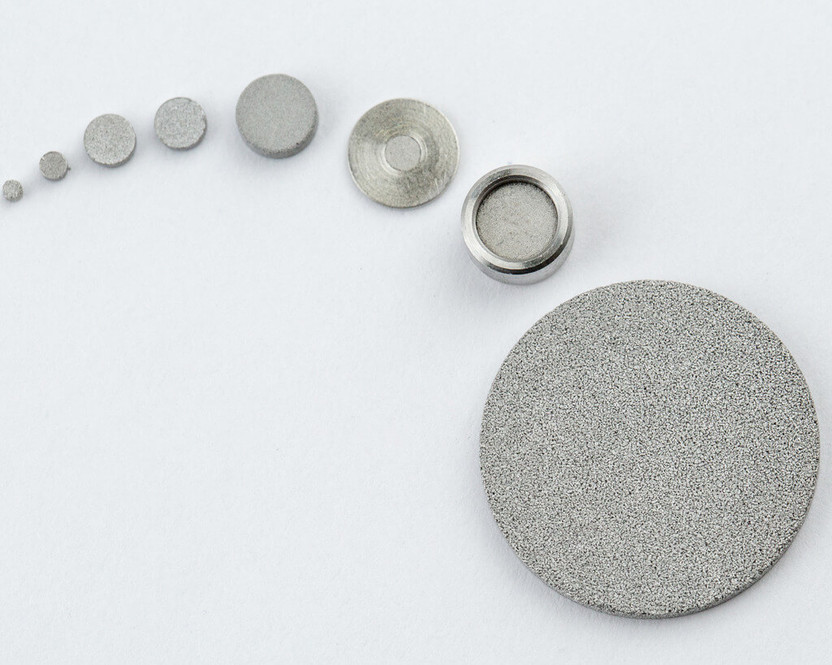
Stainless Steel vs Titanium Frits for HPLC, UHPLC, and LC/MS
Posted by Ian Ford on Jun 22nd 2026
Choosing the right frit material is an important decision in HPLC, UHPLC, LC/MS, and OEM chromatography system design. While frit size and porosity often get most of the attention, material selection can have a major impact on chemical compatibility, pressure performance, filtration behavior, durability, and long-term system reliability.
Two common material choices for precision sintered frits are stainless steel and titanium. Both can be excellent options, but they are not interchangeable in every application. The best choice depends on the fluid path, sample type, solvents, pressure requirements, and whether the frit will be used in a standard chromatography setup, an LC/MS workflow, or a custom OEM assembly.
Optimize Technologies offers OPTI-FRIT sintered frits in 316L stainless steel and titanium, with custom options available for material, diameter, thickness, porosity, testing, and production requirements.
Quick Answer: Stainless Steel vs Titanium Frits
Stainless steel frits are often a strong choice for standard HPLC, UHPLC, filtration, column hardware, and cost-effective OEM fluidic applications where the chemistry is compatible with stainless steel. Titanium frits are often preferred for LC/MS, bioinert workflows, corrosion-sensitive applications, metal-sensitive analytes, and systems designed around titanium wetted parts.
What Does a Frit Do in an HPLC or LC/MS System?
A frit is a porous component used to control, filter, retain, support, or distribute flow within a fluidic system. In chromatography and analytical instrument applications, frits are often used to:
- Retain particles
- Protect downstream components
- Support packed media
- Filter particulates from the fluid path
- Help manage flow characteristics
- Serve as part of a flow restrictor or precision fluid-control component
- Support OEM chromatography and instrument assemblies
Because frits sit directly in the fluid path, their material matters. The frit must be compatible with the mobile phase, sample chemistry, pressure range, and performance expectations of the system.
Stainless Steel Frits
Stainless steel frits are widely used in HPLC, UHPLC, chromatography, filtration, and high-pressure fluidic systems. For many applications, stainless steel offers a practical balance of strength, durability, availability, and cost effectiveness.
316L stainless steel is a common choice because it offers good corrosion resistance and mechanical strength for many analytical and industrial fluidic environments. It is often used in conventional HPLC systems, column hardware, inline filtration, fittings, and OEM assemblies where the chemistry is compatible with stainless steel.
Advantages of Stainless Steel Frits
Stainless steel frits are a strong option when the application requires durability, pressure resistance, and a proven material for chromatography hardware. They are often selected for:
- General HPLC and UHPLC applications
- Column hardware and replacement frits
- Inline filtration
- High-pressure fluidic assemblies
- OEM chromatography components
- Flow control or flow restrictor applications
- Applications where stainless steel is already used throughout the fluid path
Stainless steel is also commonly chosen when cost, availability, and mechanical robustness are important. In many systems, stainless steel frits provide reliable performance without requiring a more specialized material.
When Stainless Steel May Not Be the Best Choice
Stainless steel is not ideal for every chemical environment. Some applications involve sensitive biomolecules, metal-sensitive analytes, aggressive solvents, corrosive conditions, or workflows where metal interaction is a concern. In those cases, titanium may be a better fit.
Stainless steel may be less desirable when:
- The application requires a more bioinert fluid path
- The sample or analyte is sensitive to metal interactions
- Corrosion resistance is a major concern
- The system is designed around titanium or other bioinert components
- The application is LC/MS-focused and requires special attention to cleanliness, compatibility, and background performance
This does not mean stainless steel is inferior. It means material choice should match the application.
Titanium Frits
Titanium frits are often selected for applications where bioinert performance, corrosion resistance, or LC/MS compatibility is especially important. titanium is a commercially pure titanium grade commonly used in fluidic components where corrosion resistance and material compatibility are key considerations.
For chromatography and mass spectrometry workflows, titanium can be useful when stainless steel is not the preferred material in the fluid path. It may be selected for bioanalytical applications, metal-sensitive analytes, or systems designed to reduce unwanted interactions between the sample and the wetted surfaces.
Advantages of Titanium Frits
Titanium frits are a strong choice when material compatibility is a top priority. They are often considered for:
- LC/MS and mass spectrometry workflows
- Bioinert or biocompatible fluid paths
- Metal-sensitive analytes
- Applications involving corrosion concerns
- Specialized chromatography systems
- OEM assemblies requiring titanium wetted parts
- High-performance analytical workflows where material selection is critical
Titanium can also be helpful when customers want consistency across a bioinert flow path. If the rest of the system is built around titanium or other low-interaction materials, using a titanium frit may help maintain that design approach.
When Titanium May Not Be Necessary
Titanium is not always required. For many standard HPLC and filtration applications, stainless steel may provide the right combination of strength, performance, and cost effectiveness. Titanium may add value in specialized applications, but it may not be needed if the chemistry is compatible with stainless steel and the system does not require a bioinert fluid path.
In many cases, the best approach is to evaluate the complete application rather than choosing titanium simply because it sounds more advanced.
Stainless Steel vs Titanium Frits: Quick Comparison
| Factor | Stainless Steel Frits | Titanium Frits |
|---|---|---|
| Common material | 316L stainless steel | Titanium |
| Best fit | General HPLC, UHPLC, filtration, OEM components | LC/MS, bioinert, corrosion-sensitive, metal-sensitive applications |
| Strength | Excellent for many high-pressure applications | Strong and suitable for many demanding fluidic applications |
| Corrosion resistance | Good in many compatible environments | Often preferred where improved corrosion resistance is needed |
| Bioinert performance | Application dependent | Often selected for bioinert fluid paths |
| Cost effectiveness | Often more economical | Often selected for specialized requirements |
| Typical use case | Standard chromatography and filtration | Specialized LC/MS, bioanalytical, or OEM applications |
Need stainless steel or titanium frits for an OEM assembly?
OPTI-FRIT sintered frits can be tailored around material, porosity, diameter, thickness, testing, and production requirements for HPLC, UHPLC, LC/MS, OEM chromatography, flow control, and critical filtration applications.
Porosity Still Matters
Material is only one part of frit selection. Porosity is equally important.
Smaller pore sizes can provide finer particle retention, but they may also increase backpressure. Larger pore sizes may allow easier flow, but they may not retain smaller particles as effectively. The correct choice depends on what the frit needs to retain, the allowable pressure drop, the flow rate, and the overall system design. For more detail, read our guide on how to choose the right HPLC frit porosity.
OPTI-FRIT sintered frits are available in a wide selection of standard porosities from 0.2 micron to 10 micron, with custom configurations available depending on the application. For specialized requirements, frit thickness, diameter, material, and porosity can be evaluated together.
Thickness, Diameter, and Geometry
For OEMs, column manufacturers, and instrument designers, frit dimensions are just as important as material and porosity. Diameter and thickness affect fit, support, pressure behavior, flow characteristics, and manufacturability.
A frit that works well in one assembly may not work in another if the geometry, compression, sealing surface, or flow path is different. That is why custom frit design often starts with the full application, not just a pore size.
Helpful information for a custom frit quote includes:
- Material preference: 316L stainless steel or titanium
- Outside diameter
- Thickness
- Target porosity
- Application type
- Flow and pressure requirements
- Solvent or sample compatibility concerns
- Expected quantity or annual usage
- Testing or certificate requirements
- Drawing, sample, or existing part number if available
Testing and Documentation
For critical chromatography, LC/MS, and OEM applications, testing can be an important part of frit selection. Frits may need to meet performance expectations for flow, backpressure, particle retention, and pore consistency.
OPTI-FRIT testing options include:
- Bubble point testing
- Flow and backpressure testing
- Particle retention testing
- Mass spectrometry validation
- Testing certificates for traceability and documentation
This type of testing can be especially useful for manufacturers, regulated laboratories, and technical teams that need documented performance and lot consistency. If your system is experiencing pressure problems, read our troubleshooting guide on what causes HPLC frit clogging and high backpressure.
Which Frit Material Should You Choose?
Choose stainless steel frits when you need a durable, reliable, cost-effective solution for standard HPLC, UHPLC, filtration, column hardware, or OEM fluidic applications where stainless steel is compatible with the chemistry.
Choose titanium frits when the application requires a bioinert fluid path, improved corrosion resistance, LC/MS compatibility, or reduced concern over metal-sensitive analyte interactions.
In many cases, the best answer depends on the complete system. Material, porosity, thickness, diameter, pressure, flow, chemistry, and documentation requirements should all be considered together.
Related OPTI-FRIT Guides
Need Custom Stainless Steel or Titanium Frits?
OPTI-FRIT sintered frits from Optimize Technologies are designed for HPLC, UHPLC, LC/MS, OEM chromatography, flow control, and critical filtration applications. Available in 316L stainless steel and titanium, OPTI-FRIT can be tailored around your application requirements.
If you need help choosing between stainless steel and titanium frits, or a custom frit for a specific assembly, send us your frit requirements, drawing, sample, or application details. Helpful information includes material, porosity, diameter, thickness, quantity, pressure and flow conditions, solvent compatibility, testing needs, and whether the frit will be used in HPLC, UHPLC, LC/MS, an OEM assembly, or another fluidic application.
Request a Quote for Custom OPTI-FRIT Sintered Frits
Frequently Asked Questions
Are stainless steel frits better than titanium frits?
Not always. Stainless steel frits are often a good fit for standard HPLC, UHPLC, filtration, and OEM applications where stainless steel is chemically compatible. Titanium frits are often preferred when bioinert performance, corrosion resistance, LC/MS compatibility, or reduced concern over metal-sensitive analyte interactions is important.
When should I choose titanium frits for LC/MS?
Titanium frits may be a good choice for LC/MS workflows when the application requires a more bioinert fluid path, improved corrosion resistance, or reduced interaction between the sample and wetted metal surfaces.
Are stainless steel frits suitable for UHPLC?
Stainless steel frits are commonly used in HPLC and UHPLC hardware when the material is compatible with the solvent environment, sample chemistry, pressure requirements, and system design.
Can OPTI-FRIT be made in custom sizes and porosities?
Yes. OPTI-FRIT sintered frits can be quoted around custom requirements such as material, outside diameter, thickness, porosity, testing, and production quantity.
What information is needed for a custom frit quote?
Helpful quote details include material preference, outside diameter, thickness, target porosity, quantity, application, pressure and flow conditions, solvent compatibility, testing requirements, and any available drawing, sample, or existing part number.